
ANIMAL
CONTROL
Contact Us
6584 Beehive Dr.
Gloucester, VA 23061
Phone: 804-693-5290
Fax: 804-824-2463
After Hours: 804-693-3890
Hours
Monday through Friday
8 a.m. to 4:30 p.m.
Services
The normal hours of operation are 8 a.m. until 4:30 p.m., Monday through Friday. The Animal Control Department will respond to emergencies after normal duty hours. The following situations would constitute an emergency:
Domestic animal threatening bodily harm
Livestock or poultry kills
Injured domestic stray animals
Animal bite to a person
Loose livestock
Possible rabid animal
Stray dog in public area such as a playground or a public park
Animal Control can be contacted at 804-693-5290 during normal duty hours and at 804-693-3890 for emergencies after normal duty hours, weekends, and holidays.
May 2: Rabies Clinic for Cats and Dogs
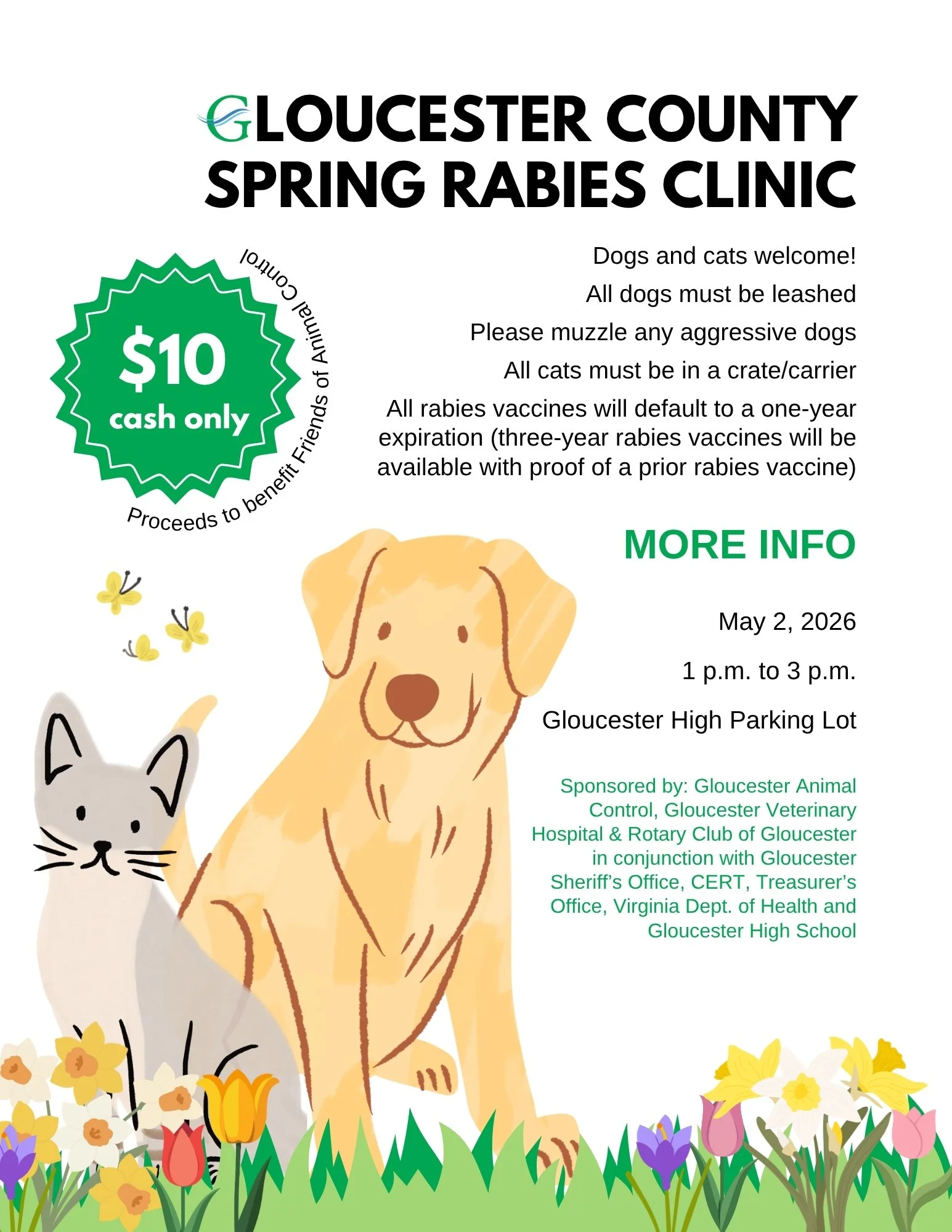
Gloucester County Animal Control will be hosting a Rabies Clinic for both cats and dogs on Saturday, May 2 from 1-3 p.m. at the Gloucester High School Student Parking Lot.
All dogs must be leashed, and aggressive dogs are asked to be muzzled. All cats must be in a crate or carrier.
Rabies vaccines will default to a one-year expiration (three-year rabies vaccines will be available with proof of a prior rabies vaccine).
The cost is $10 per animal (cash only). All proceeds will benefit Friends of Animal Control.
Adopt an Animal
Gloucester County facilitates the adoption of companion animals through its local Animal Control Shelter, Friends of GCAC, and additional rescue partners. Walk-in meet-and-greets with adoptable animals are not available at this time. For question about an adoptable pet, please call the Animal Control office at 804-693-5290.
In order to be approved for adoption, interested individuals must complete an adoption application. Please fill out the application in its entirety and return it to the Animal Control office. Submissions can be made via email by sending completed applications to jwilson@gloucesterva.info, oborrero@gloucesterva.info, emersonjoyce76@outlook.com.
Completed applications can also be dropped off at the Animal Control office located at 6584 Beehive Dr., Gloucester, VA 23061.

Adoption Process
Gloucester County Animal Control and Friends of GCAC work together to help every animal find a safe and loving home. Our adoption process is simple:
View Available Pets
Visit Petfinder.com to see all adoptable animals petfinder.com.Complete the Adoption Application
Fill out the adoption application online and submit it to Animal Control.Phone Interview
An Animal Control officer or approved Friends of GCAC volunteer will contact you by phone to review your application and answer questions.Meet & Greet
We strongly recommend a meet and greet with your entire household, including any current dogs, to ensure a good match.Foster-to-Adopt Option
We offer a foster-to-adopt program for approved adopters who want a trial period before finalizing the adoption.
Animal License Requirements
All dogs owned by residents of Gloucester County, including military personnel, must be licensed. Licenses may be obtained by mail or in person at the Treasurer’s office. A valid rabies certificate must be presented at time of purchase. The rabies certificate should indicate if the dog has been neutered or spayed. If not, other evidence of alteration may be required.
All dogs over the age of 4 months old must have a county license. The county license must be worn on the dog at all times unless the dog is competing in a dog show or when the dog has a skin condition which would be exacerbated by the wearing of a collar.
Rabies Inoculation
All dogs, cats and ferrets by 4 months of age must have been inoculated or vaccinated against rabies by a currently licensed veterinarian or by an animal technician certified pursuant to the Code of Virginia.
Neutered or Spayed Dog
$3 for one year
$8 for multi-year
Unneutered or Unspayed
$10 for one year
$25 for multi-year
The license tax for each dog is due no later than 30 days after a dog has reached the age of 4 months, or no later than 30 days after an owner acquires a dog 4 months of age or older. Such license tax shall cover a license period which runs concurrently with the rabies vaccination and shall expire upon expiration of the current rabies vaccination. Visit the Treasurer’s page for more information on fees, payment options, and to submit an application.

Kennels
$50 for kennels with not less than 5 nor more than 10 dogs
$100 for kennels with not less than 11 nor more than 20 dogs
$150 for kennels with not less than 21 nor more than 30 dogs
$200 for kennels with not less than 31 nor more than 40 dogs
$250 for kennels with not less than 41 nor more than 50 dogs
All kennel licenses shall be due on January 1 and not later than January 31 of each year. Visit the Treasurer’s page for more information on fees, payment options, and to submit an application.
Cats
Cats do not require a county license, but all cats require an up-to-date rabies vaccination.
How Animal Control Can Assist with Community Cats
Community cats (also known as free-roaming, stray, or feral cats) are an important part of our county’s animal welfare work. Animal Control’s goal is to ensure humane treatment, public safety, and responsible management through education, resources, and legal guidance.
Relevant Laws & Definitions
Definition of Ownership
Under Virginia law, a person is considered the "owner" or "custodian" of an animal if they provide care, shelter, food, water, or have taken responsibility for the animal's well-being. Regularly feeding a community cat may establish ownership. Once ownership is established, the individual must follow all state animal care laws, including:
Providing adequate food, water, and shelter.
Providing veterinary care for illness or injury.
Ensuring rabies vaccination is current.
Community Cat & TNR Guidance
Animal Control supports humane Trap-Neuter-Return (TNR) practices. Cats are humanely trapped, spayed/neutered, vaccinated, ear-tipped, and returned to their outdoor home. TNR:
Reduces population growth.
Decreases nuisance behaviors (spraying, fighting, yowling).
Improves overall cat health.
Nuisance Cat Concerns
If a community cat becomes a nuisance—such as getting into trash, spraying, fighting, or damaging property, Animal Control can offer options.
What Residents Can Do
Use deterrents: motion-activated sprinklers, citrus scents, commercial repellents, or garden fencing.
Secure trash and feeding areas: keep lids tight, feed pets indoors, remove food attractants.
Block access: close crawl spaces, use humane barriers for gardens/porches.
How Animal Control Can Help
Evaluate whether the cat belongs to an established colony.
Determine whether TNR has been completed.
Provide deterrent tips and colony management advice.
Trap the cat for TNR if necessary. (Case by case basis)
Step in if the cat poses a health or safety risk.
What NOT to Do
Do not poison, harm, or relocate cats—this is illegal and inhumane.
Do not remove kittens unless they are clearly in danger. Mothers often return and removing them too early reduces survival.
Do not feed if you cannot commit to responsible colony care.
When to Contact Animal Control
Call us if:
A cat is injured or visibly ill.
You suspect cruelty or neglect.
You need help managing a colony through TNR.
A cat becomes a nuisance despite deterrents.
You need guidance about legal responsibilities of caretaking.
Animal Control aims to balance animal welfare with community needs. Through education, humane practices, and partnerships with local rescues and caretakers, we help ensure community cats are managed responsibly and compassionately.
For assistance, call our office anytime. We’re here to help both you and the cats.

How Animal Control Can Assist
Welfare Checks
Animal Control officers can respond to concerns about the health or well-being of a community cat. Examples include:
Cats appear sick or injured.
Cats lack adequate shelter or care.
Potential cruelty or neglect.
We assess the situation and determine whether medical treatment, intervention, or owner contact (if applicable) is needed.
Injured or Sick Cats
If a community cat is injured, ill, or unable to care for itself:
Animal Control can respond and safely capture the cat.
The animal will be evaluated for veterinary care.
If the cat is part of a known colony, caretakers will be notified when possible.
TNR (Trap Neuter Release) Support
We assist residents by:
Providing guidance on TNR best practices.
Helping identify resources for spay/neuter.
Trapping cats when safety requires professional handling.

Exotic Animal Permits
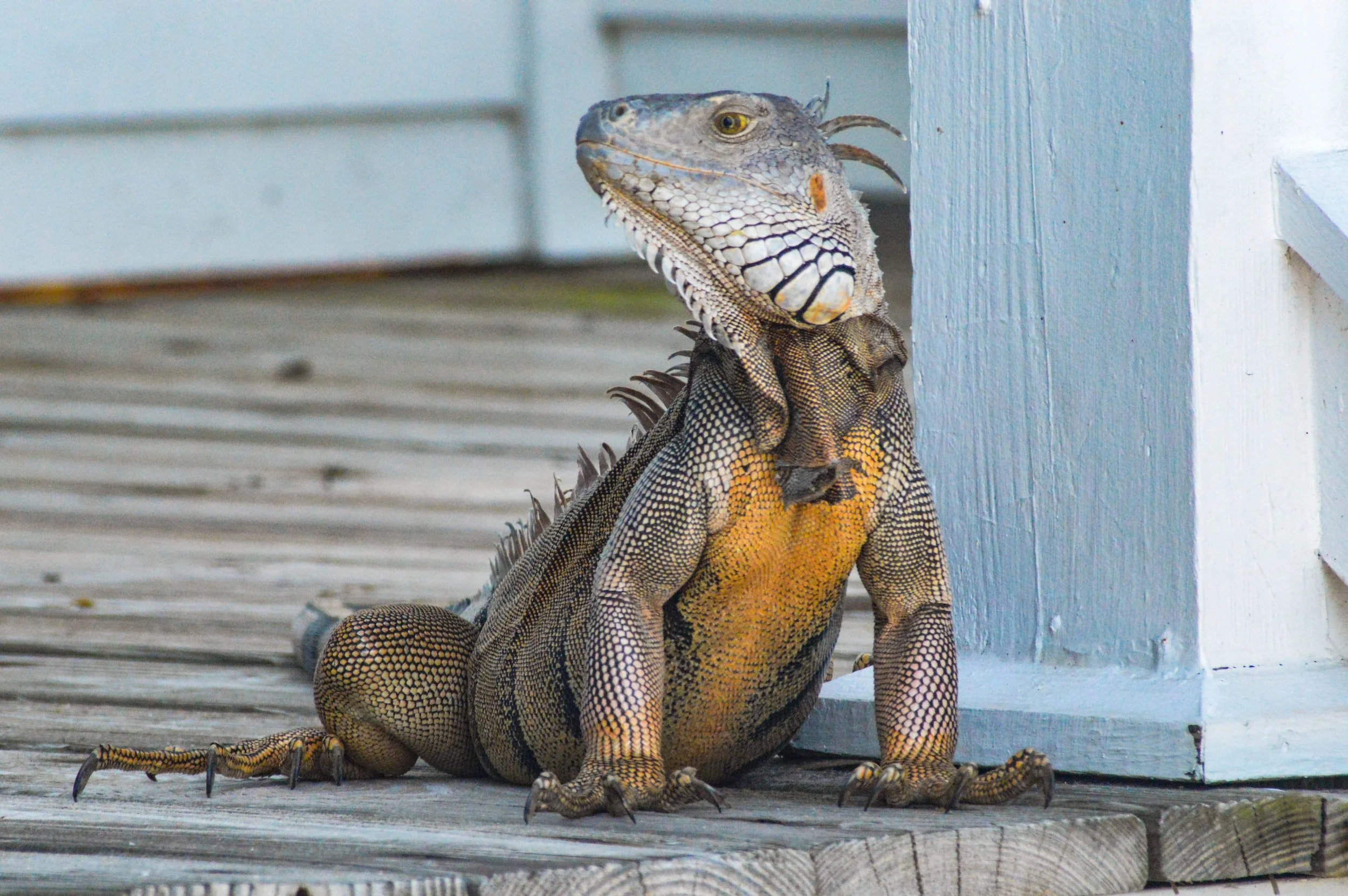
All exotic animal owners must purchase a permit within 10 working days of the animal entering the county (including animals already in the county prior to December 1, 2002). Initial permit fee is $50 per address. Annual permit renewal is $25. For additional information please review the County’s Animal Welfare and Control Ordinance.
Please fill out all of the forms that are linked below to obtain your 2023 Exotic Animal Permit.
All completed forms can be submitted by emailing jwilson@gloucesterva.info or drop them off in our office.
Please Note:
Exotic animal means any live monkey (non-human primate), raccoon, skunk, wolf, wolf-canine hybrid, squirrel, fox, and other non-domesticated porcine, leopard, tiger, lion, panther, or any other similar warm-blooded animal; venomous reptiles to include, but not limited to: coral snakes, rattlesnakes, cottonmouth snakes, vipers and cobras, sea snakes, gila monsters, mexican bearded lizards, or nonvenomous reptiles 6 feet or longer in length which can normally be found in the wild; all constrictor-type snakes; poisonous arachnids to include, but not limited to: black widow spiders, brown recluse spiders, scorpions; poisonous amphibians to include, but not limited to: poison arrow frogs; any member of the crocodilian family including, but not limited to: alligators, crocodiles, caimans, and gavials; or any other animal that would require a standard of care and control greater than that required for customary household pets sold by commercial pet shops or domestic farm animals. Ferrets and birds which are normally purchased through pet stores, nonpoisonous reptiles less than 6 feet in length, domestic rabbits, and domestic rodents which have been bred in captivity and have not been kept in the wild, shall be excluded from the definitions of wild and exotic animals.
Wildlife Information
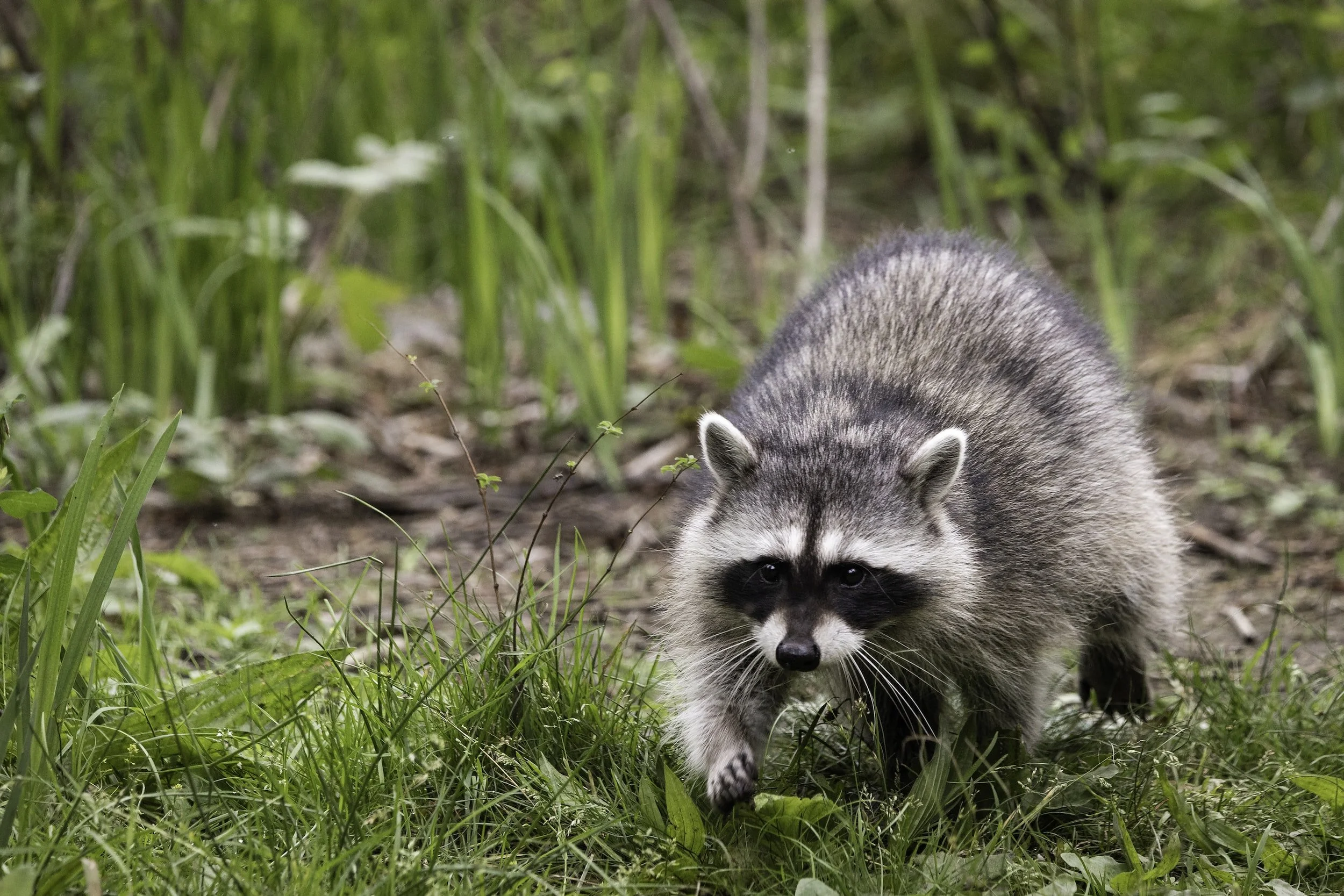
If you are in need of assistance or Information regarding wildlife issues please contact the Virginia Wildlife Conflict Helpline by calling 1-855-571-9003.
Wildlife Emergency Response
Gloucester County Animal Control Officers will respond to the following wildlife emergencies:
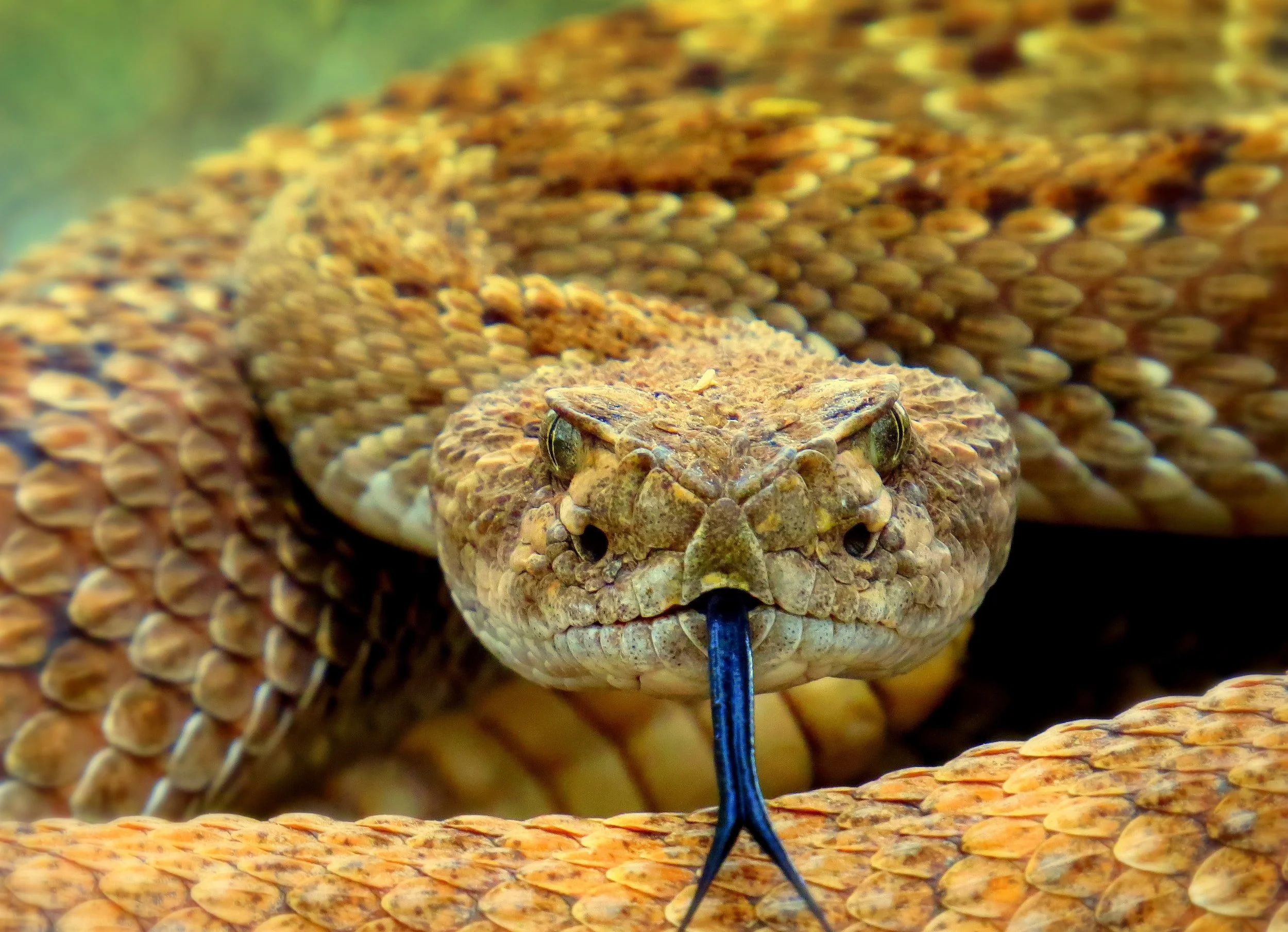
Wildlife in the living area of a residence or occupied area of a business that poses a threat to humans or domestic animals. Animal Control Officers will respond to snakes inside the home that are known to be a venomous species ONLY. If you need assistance identifying snake species, please check the Virginia Herpetological Society website.
Wildlife displaying signs and symptoms of rabies.
Sick or injured wildlife.
Wildlife that has had physical contact with a human or domestic animal (potential rabies exposure).
Wildlife that poses a threat to humans or domestic animals.
Gloucester County Animal Control Officers DO NOT respond to situations when wildlife poses no threat to humans or domestic animals. These include the following:
Wild animal damage to gardens, flower beds, ornamental shrubs (typically squirrels, deer, groundhogs, raccoons).
Wild animals in attics, basements, garages and storage sheds (typically squirrels, raccoons, bats or snakes).
Wild animals inhabiting or frequenting populated areas (typically squirrels, deer, foxes, opossums or skunks).
Wild animals living under decks, storage sheds, porches and the like (typically groundhogs, skunks, raccoons or opossums).
Information regarding nuisance wildlife can be found on the Virginia Department of Wildlife Resources website. Or call the Virginia Wildlife Conflict Helpline at 1-855-571-9003.
Tips on Living with Wildlife
By taking precautions you can keep your family and pets safe while enjoying the beautiful wildlife we have here in Gloucester County.
Vaccinate pets against rabies and keep vaccinations up to date. Rabies vaccines are required by law for dogs and cats age 4 months or older.
Keep your distance from animals acting strangely whether they are wild or companion animals with an unknown owner. Report strange animal behavior or animal attacks to Gloucester County Animal Control by calling 804-693-5290.
Prevent contact between pets and wildlife, especially at night. Walk pets on a leash and feed cats and dogs inside.
Eliminate possible sources of food for wildlife from your yard and keep trash can lids tightly closed.
Any animal bites to people or pets or sightings of animals suspected of having rabies should be reported to Animal Control or the Gloucester County Health Department at 804-693-6130.
When You See a Coyote
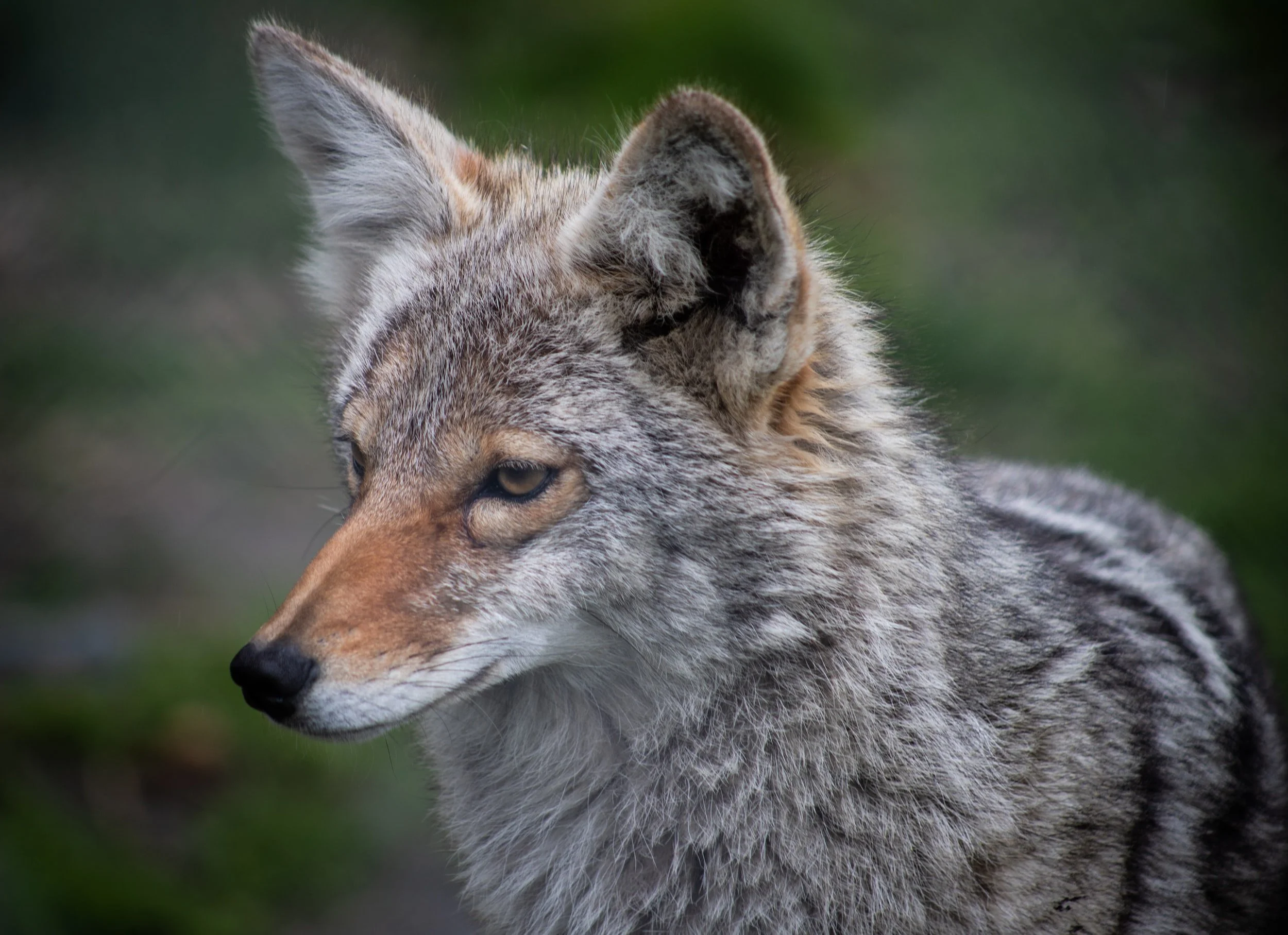
Remember, do not panic! Coyotes are normally afraid of humans. It will usually run off when it sees or smells you. If the coyote does not run off, start waiving your arms and make a lot of noise. If it still does not leave, throw rocks or sticks at it. If this fails, contact the Animal Control office to get additional advice. Please remember that the land in our county was home to the wildlife before it was ours and it is our responsibility to protect and maintain a safe and peaceful environment for both our citizens and our wildlife!
Removal of Dead Animals Along Roadways
For the removal of dead animals along roadways, contact the Virginia Department of Transportation (VDOT) by calling 804-693-3070.
Resources
Disaster Preparedness
View a list of hotels in Virginia that accept pets (PDF). Please note that it is important that you contact the hotel prior to arrival to ensure there is space available for you and your pet and that the pet requirements have not changed. Remember, if you must evacuate do not leave your pets behind to fend for themselves.
Disaster Kits
Keep a disaster kit available for you and your pet. Your pet's kit should have the following items:
Medications, immunization records and a first aid kit.
Sturdy leashes, muzzles, harnesses, carriers or cages to transport pets safely. Carriers should be large enough for the pet to stand comfortably, turn around and lie down. Include blankets or towels for bedding and warmth.
Current photos of your pets in case they get lost.
Food, drinking water, bowls, cat litter/pan and can opener.
Information on feeding schedules, medical conditions, behavior problems and the name and number of your veterinarian.
Pet beds and toys, if easily transportable.
Contact Information
If you must drop your pet off at a housing facility ensure they have good contact phone numbers. Include phone numbers for family or friends out of the area in case the facility is not able to contact you. You may have to stay somewhere for an extended period of time and be unable to contact the facility where your pet is located.
If you return and are unable to locate your pet, contact Animal Control immediately.
Resources
Volunteer Opportunities
Please read the K9 walker volunteer description in the link posted below and if you are interested in volunteering, fill out the K9 Walker Volunteer Application in full and return it back to our office. Exciting news! Gloucester County Animal Control is now welcoming volunteers for our K9 Walker Team! Gloucester County Animal Control is looking to add to our current volunteer team. Who would not love a few hours walking and playing with dogs?! If you are not a big walker, we need people to stay in the play yard as well as monitoring pups. Here at the shelter we are committed to socializing and teaching basic commands to our homeless pets to help them get adopted! Hours are typically between 3 p.m. and 4:30 p.m., Monday through Sunday. Pick a day, any day or multiple days! We are located at 6584 Beehive Drive. As of now we are asking for our volunteers to be over 18 years of age. MUST LOVE DOGS! Please be aware that all applicants must be able to complete a background check through the County.